A Mom- to Be’s Guide to Bliss: Is Prenatal Massage Safe, and What Are the Benefits?
Growing a tiny human is a beautiful journey, but let’s be honest-it’s also hard work! Between the aching lower back, swollen ankles, and sleepless nights, your body is going through a massive transformation.
If you’ve been Googling ways to find some relief, “prenatal massage” has likely popped up. But it’s completely natural to have questions: Is it actually safe? Will it trigger contractions? How is it different from a regular massage.
Today, we’re breaking down everything you need to know about prenatal massage so you can pamper yourself with total peace of mind.
What Exactly Is a Prenatal Massage?
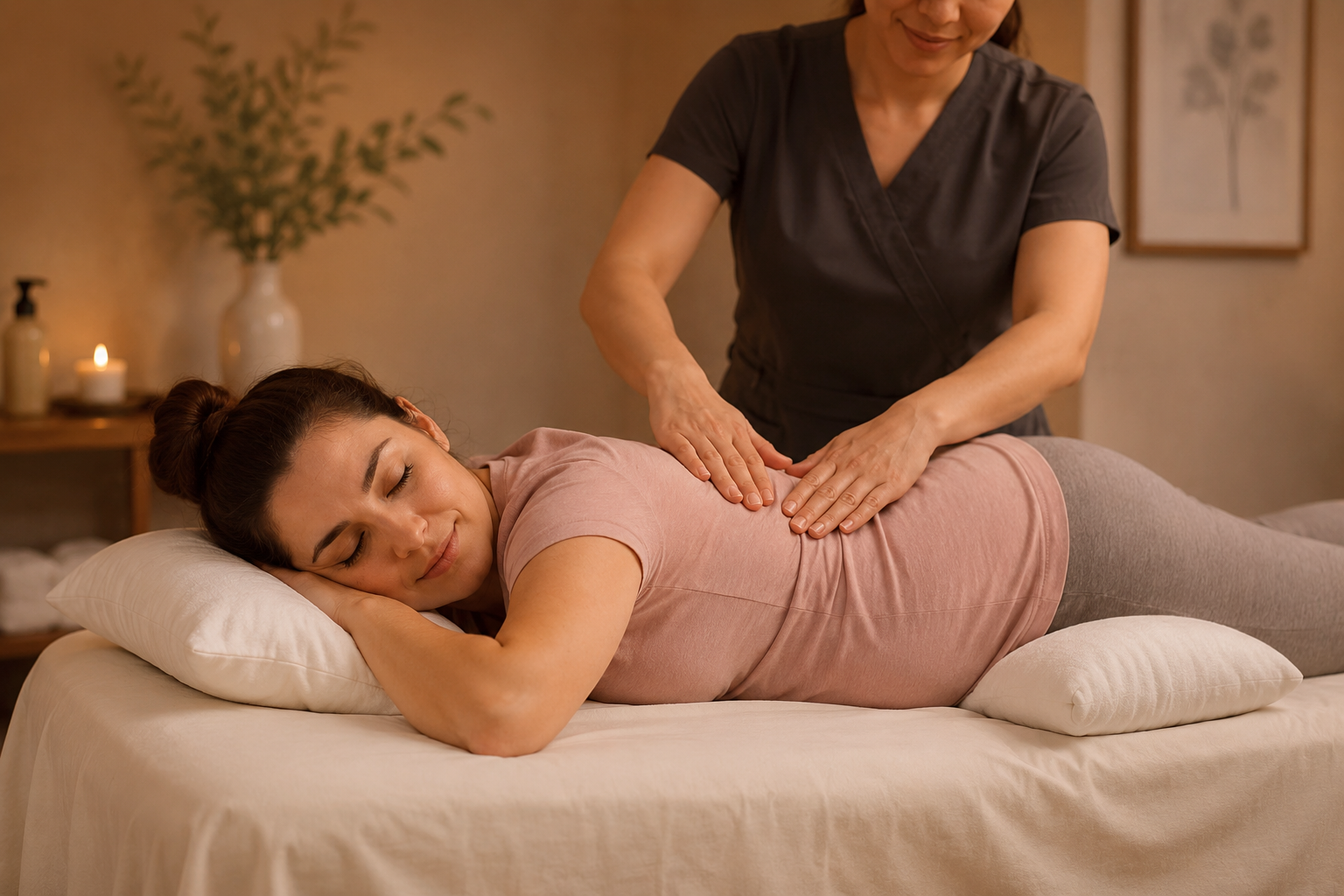
A prenatal massage isn’t just a standard spa treatment with a different name. It’s specifically tailored to the anatomical and physiological changes a woman’s body goes through during pregnancy.
Here is how it differs from a regular massage:
● The Positioning: You won’t be lying flat on your stomach.
Instead, you’ll be safely cushioned in a side-lying position
supported by plenty of pillows to protect your belly and
lower back.
● The Pressure: The strokes are generally gentler, focusing
on relaxation and circulatory support rather than deep,
intense tissue manipulation.
● The “No-Go” Zones: Certified therapists are trained to
avoid specific pressure points (like certain areas around
the ankles and wrists) that are traditionally believed to be
stimulate the uterus.
4 Incredible Benefits of Prenatal Massage
Taking care of yourself during pregnancy isn’t a luxury - it’s a necessity. Here's what a good prenatal massage can do for you:
safety First: When is the Best Time to Go?
Timing is everything when it comes to pregnancy-safe bodywork:
● First Trimester (Weeks 1-12): Skip It. Most reputable spas and therapists will not accept clients in their first trimester. This is due to the higher natural risk of miscarriage during these weeks, as well as morning sickness.
● Second Trimester (Weeks 13-28): The Golden Window! This is the perfect time to start. Your pregnancy is stable, your belly is starting to pop, and those pregnancy aches are likely kicking in.
● Third Trimester (weeks 29-Birth) : Gentle Comfort.
Massage is wonderful during this stretch to manage pelvic pressure and heavy swelling, though positions may be adjusted to keep you as comfortable as possible.
Pro-Tip: If you have a high-risk pregnancy (such as a history of preterm labor, preeclampsia, or gestational hypertension), always get the green light from your OB-GYN or midwife before booking.
3 Things to Look for Before You Book
1. Check for Certification:
Don’t just book any masseuse. Look for a Certified Prenatal
Massage Therapist. They understand pregnancy anatomy
and know exactly how to keep you and your baby safe.
2. Watch the Oils: Some essential oils (like rosemary, sage,
or jasmine) can trigger uterine contractions and should
be avoided. Stick to unscented, ultra-hydrating carrier
oils like jojoba or sweet almond oil.
3 Speak Up: If you feel dizzy, nauseous, too hot, or if the
pressure feels
uncomfortable at any point, tell your therapist
immediately. Your comfort is the ultimate priority.
Final Thoughts
Pregnancy is a ten-month marathon, and your body is doing something truly miraculous. Taking time out to nurture yourself isn’t selfish- it’s essential. When mom feels relaxed and happy, baby does too!
How many weeks along are you?
What has been your biggest pregnancy ache so far? Let us know in the comments below or share your own prenatal massage experiences!